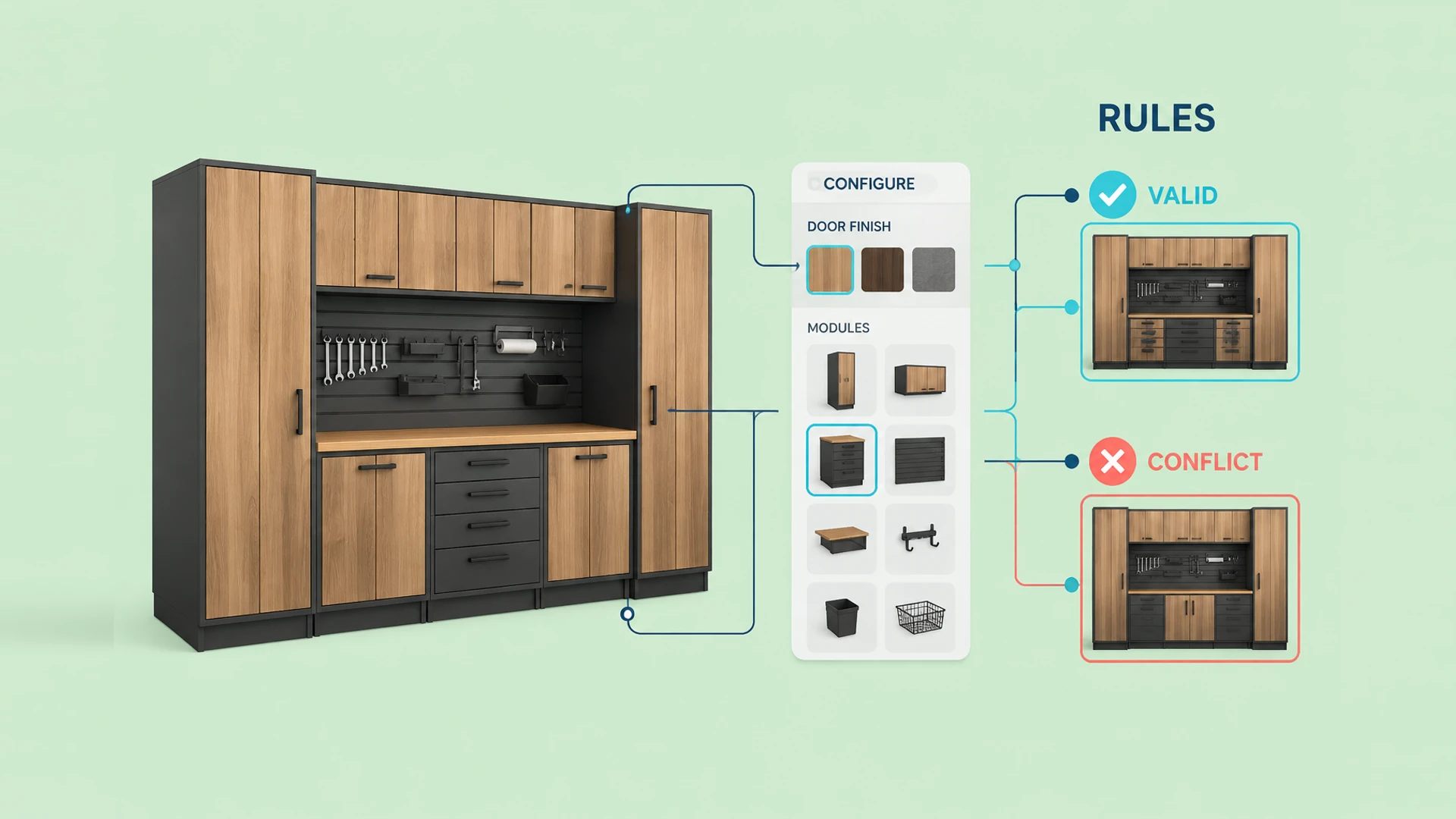
Start with four rule types
Most configuration logic can first be described as dependencies, exclusions, requirements, and defaults. Classifying rules gives product, design, and development teams a shared language.
Dependency: choosing A enables B
Exclusion: choosing A requires B to be removed
Requirement: an item must be selected before a solution is complete
Default: give buyers a valid starting point that can change when conditions allow
Rules should live in product data, not only interface code
A simple project can place rules in frontend code, but as products and options grow, rules should be expressed as structured data with option IDs, conditions, and outcomes. That makes them easier to test, reuse, and update.
The 3D scene presents a state change while the rules layer decides which choices are valid and which data changes. Keeping those responsibilities separate prevents visual and business logic from becoming tangled.
Give products, options, and modules stable IDs
Reference IDs in rules rather than visible interface copy
Describe visibility, availability, and price effects separately
Keep rule versions and test records for important changes
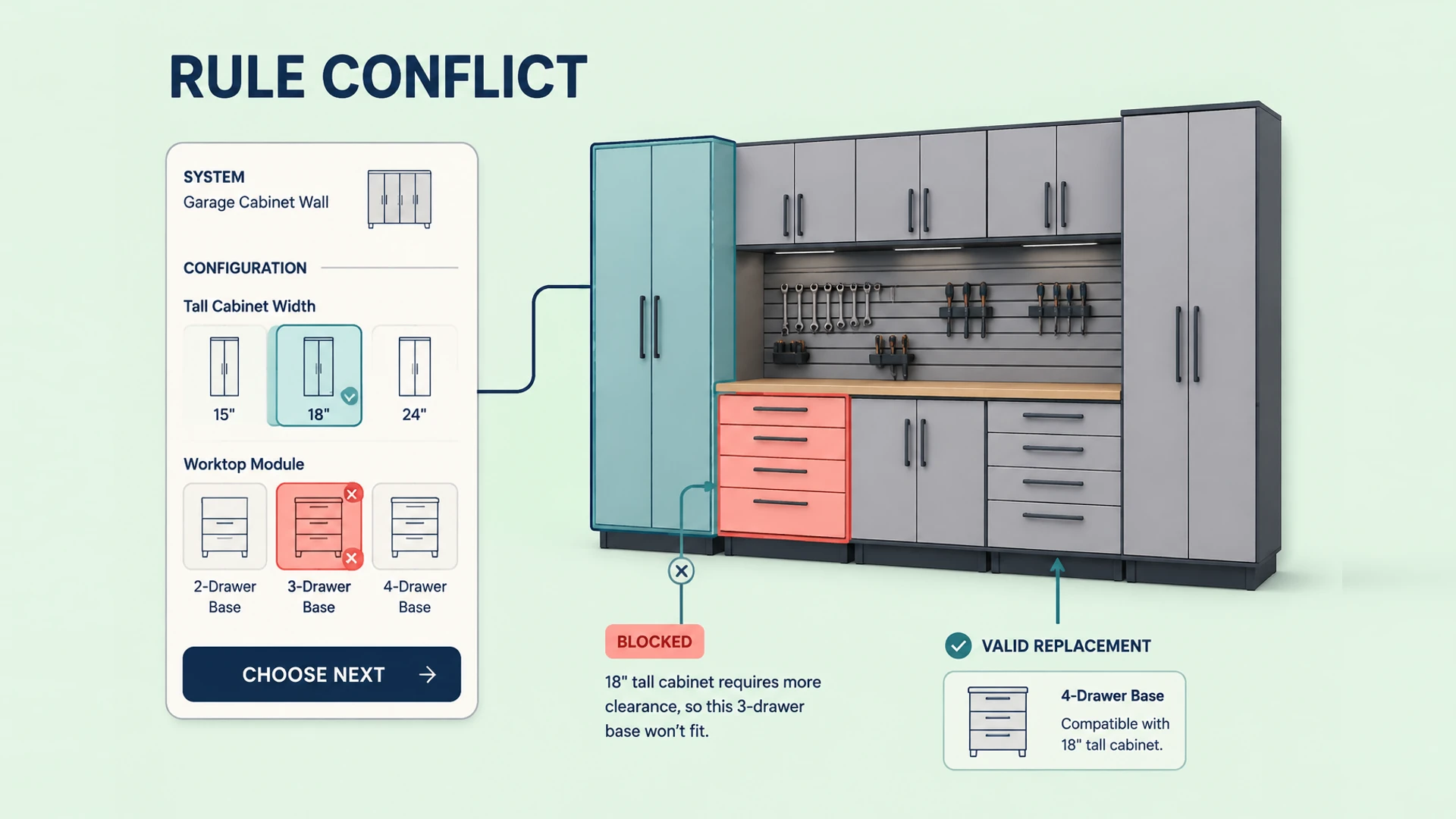
Do not silently change a buyer selection
When a new choice invalidates an existing one, the interface should explain what changed and provide an understandable next step. Quietly resetting choices weakens trust in both the product and the tool.
For complex products, a rule explanation is also a sales explanation. It can show whether a restriction comes from safety, specification, lead time, or positioning.
Explain why an option is unavailable
Show affected selections before an automatic replacement
Present important rules early in the configuration flow
Use real product language instead of technical error messages
Validate the rule design with one real product
For example, a modular sofa might show a chaise module only after a three-seat base is chosen, allow a waterproof lining only with an outdoor fabric, and reject a base that cannot support a selected width. Each rule should define its trigger, affected options, user message, and final output instead of being reduced to “add a frontend condition.”
| Rule | Trigger | System action | Buyer-facing explanation |
|---|---|---|---|
| Dependency | Base module A is selected | Enable accessory B | “B is available with A” |
| Exclusion | Material C is selected | Disable material D | “C and D cannot be combined” |
| Price impact | Upgrade option is selected | Change price state | “This option requires a revised quote” |
| Delivery constraint | Special specification is selected | Flag manual review | “Sales will confirm lead time after submission” |
Make rule testing traceable
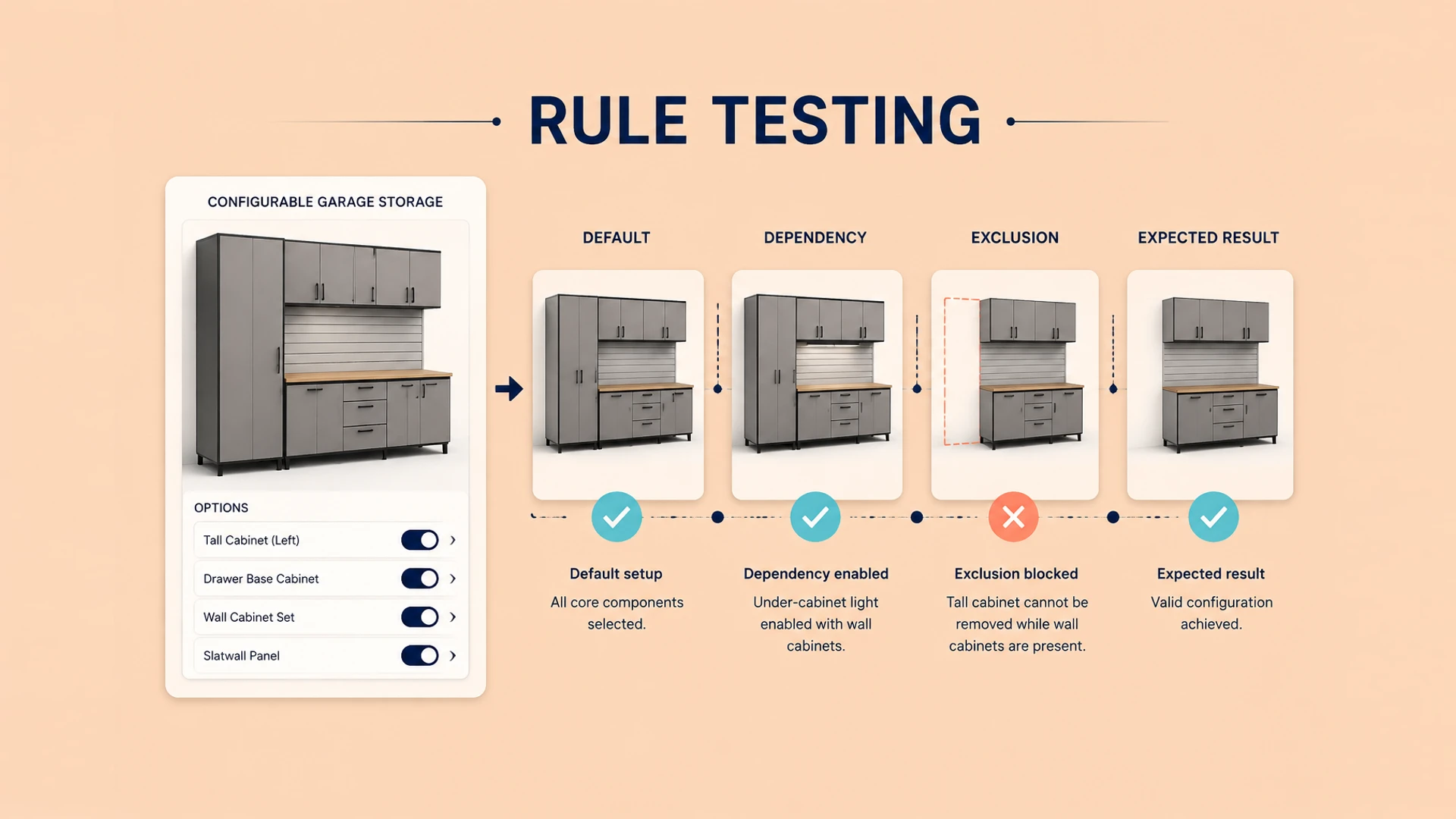
Rule testing should cover more than one valid configuration. Include defaults, every dependency and exclusion, undo actions, shared configuration links, mobile interaction, and whether old configurations remain readable after a rule change.
Keep a test ID, input options, expected result, and actual result for important rules. This makes it faster to identify the paths that need re-acceptance when products or prices change.
Rule complexity affects project cost
A simple color swap mainly changes presentation state. A product with modules, regional pricing, inventory, lead times, and quotation versions requires more discovery, interaction design, development, and QA. These should be listed separately during project estimation.
Ready to turn these principles into a project plan?
We can review your product structure, option logic, and target market to define a practical delivery scope and launch priority.