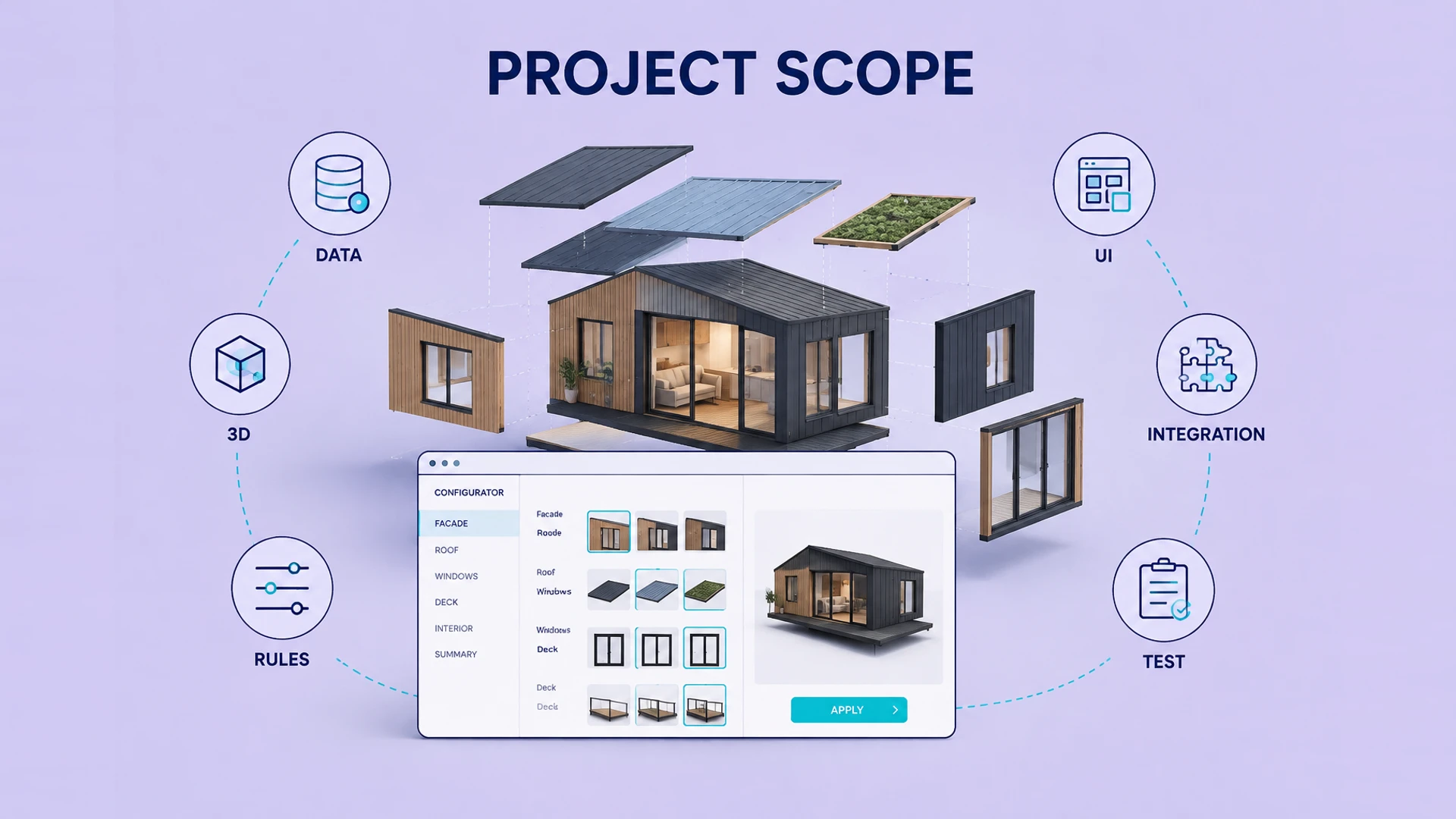
Five areas usually shape the budget
A delivery-ready configurator is more than one page. It includes product discovery, 3D asset preparation, rules and interaction design, frontend delivery, and a connection to the existing business flow where needed.
Two products can look similar in a visual mockup but require very different work because of their option count, variation logic, and intended outcome.
Whether existing 3D models can be reused, optimized, and separated
Whether options are simple swaps or include dependent and exclusive rules
Whether live pricing, SKU, saving, sharing, or exports are needed
Whether Shopify, CRM, ERP, quotation, or order systems are connected
Whether multilingual delivery, global access, and launch support are in scope
Define the scope in stages
A dependable approach is to validate one representative product and its main configuration path first, then decide whether to extend into more SKUs, automated quotes, or deeper systems work.
This ties budget to visible business outcomes and avoids committing to a large feature list before requirements have settled.
Phase one: representative product line and core visual options
Phase two: mature rules, inquiry data, and sales handoff
Phase three: SKU, price, order, or system integration
Phase four: more products, languages, markets, and operational capability
What to clarify when comparing proposals
Do not compare total price alone. Check whether each proposal defines asset responsibility, product count, rule boundaries, integration depth, acceptance criteria, and future expansion terms.
Who provides or creates the 3D assets
Whether rule discovery and product-data work are included
Whether an integration is a demo or a launch-ready connection
Whether mobile, performance, and multilingual delivery are included
How new SKUs and rules can be maintained after launch
Break the estimate down by role and feature
Custom development should not be priced only by page count. Start with a feature list, assign each item to the roles and delivery stages involved, then total the required labor and any confirmed third-party or asset costs.
| Workstream | Main work | What changes the effort |
|---|---|---|
| Product discovery | Models, options, codes, rules, and acceptance scope | Product count, option count, data readiness, review cycles |
| 3D modeling | Modeling, separation, conversion, and web optimization | Whether models exist, source format, polygon count, component complexity |
| Material production | Shaders, textures, colors, and visual tuning | Material types, texture quality, surface variations, reference samples |
| Scene and visual design | Lighting, cameras, backgrounds, and product scenes | Scene count, brand direction, product adaptation |
| UI design | Configuration panel, mobile layout, states, and result view | Page count, option hierarchy, languages, interaction states |
| Frontend development | Pages, model loading, state management, and responsive layout | Product count, component reuse, performance target |
| Interaction and rules | Dependencies, exclusions, defaults, validation, and summaries | Rule count, nesting depth, edge cases, maintenance model |
| System integration | Storefront, Shopify, CRM, ERP, quotation, or order systems | Interface count, data quality, authentication, test environment |
| QA and revisions | Functional, device, browser, performance, and acceptance changes | Markets, device scope, review rounds, data changes |
| Project management | Requirements, schedule, reviews, communication, and delivery | Teams, vendors, project duration, change volume |
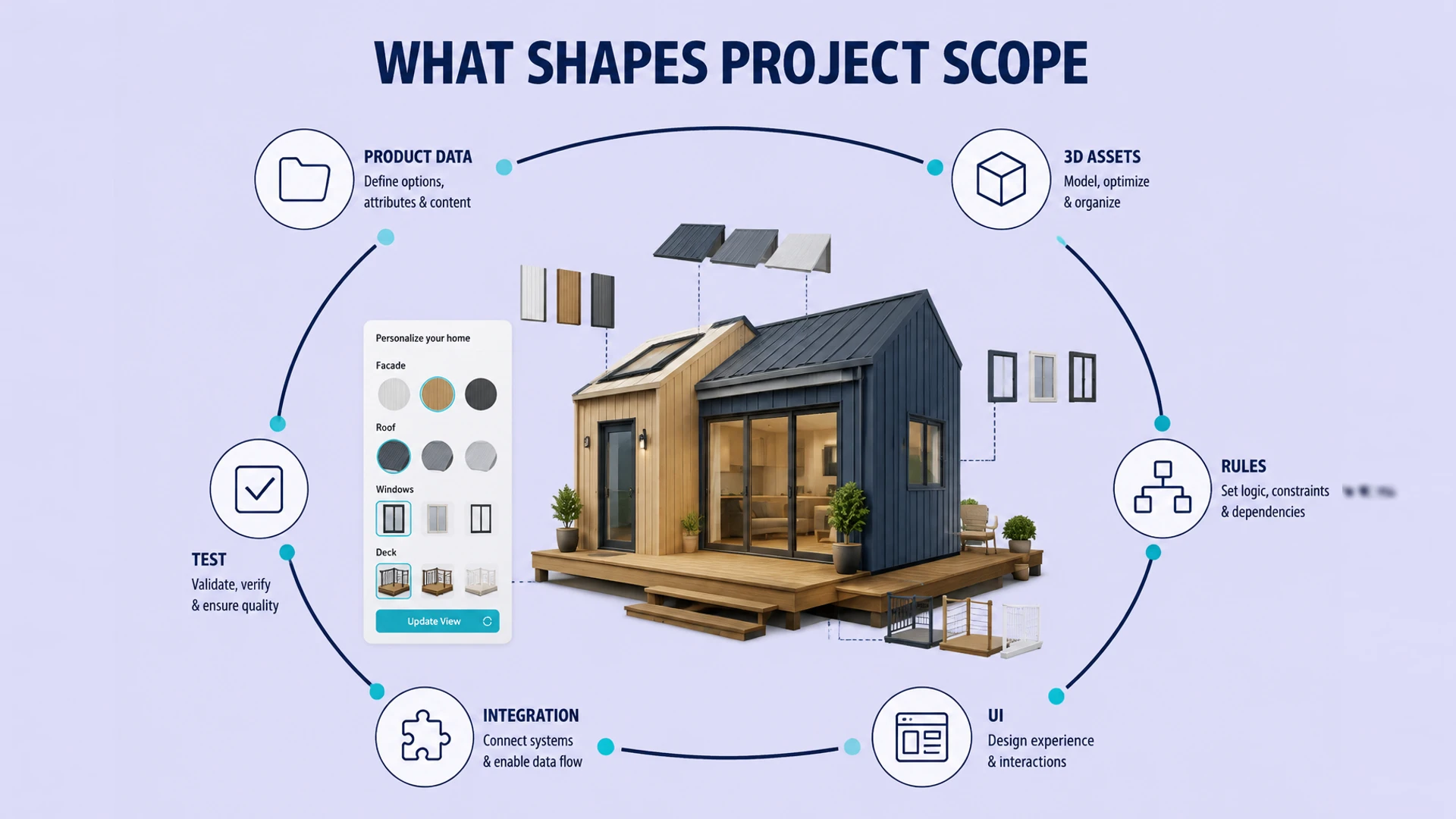
Use an auditable cost formula
An internal estimate can follow this model:
Project fee = labor for each role and feature + confirmed third-party or asset costs
Break labor into product discovery, 3D modeling, materials, scenes, UI, frontend, interaction and rules, integrations, QA and debugging, and project management. If the client supplies a usable model, only part of the modeling work changes; rules, UI, frontend, testing, and management still remain.
Always state the first-release scope in product terms. “One representative product with five visual options” and “twenty products with nested rules” may use the same page template but represent very different delivery effort.
Define the boundary in the proposal
State the included number of products and models, modeling and optimization work, material and scene count, UI screens and states, interface scope, test devices, revision rounds, client deliverables, and the pricing method for new products and rules.
This lets a buyer compare verifiable scope and prevents new requirements from being absorbed into the original estimate.
Ready to turn these principles into a project plan?
We can review your product structure, option logic, and target market to define a practical delivery scope and launch priority.