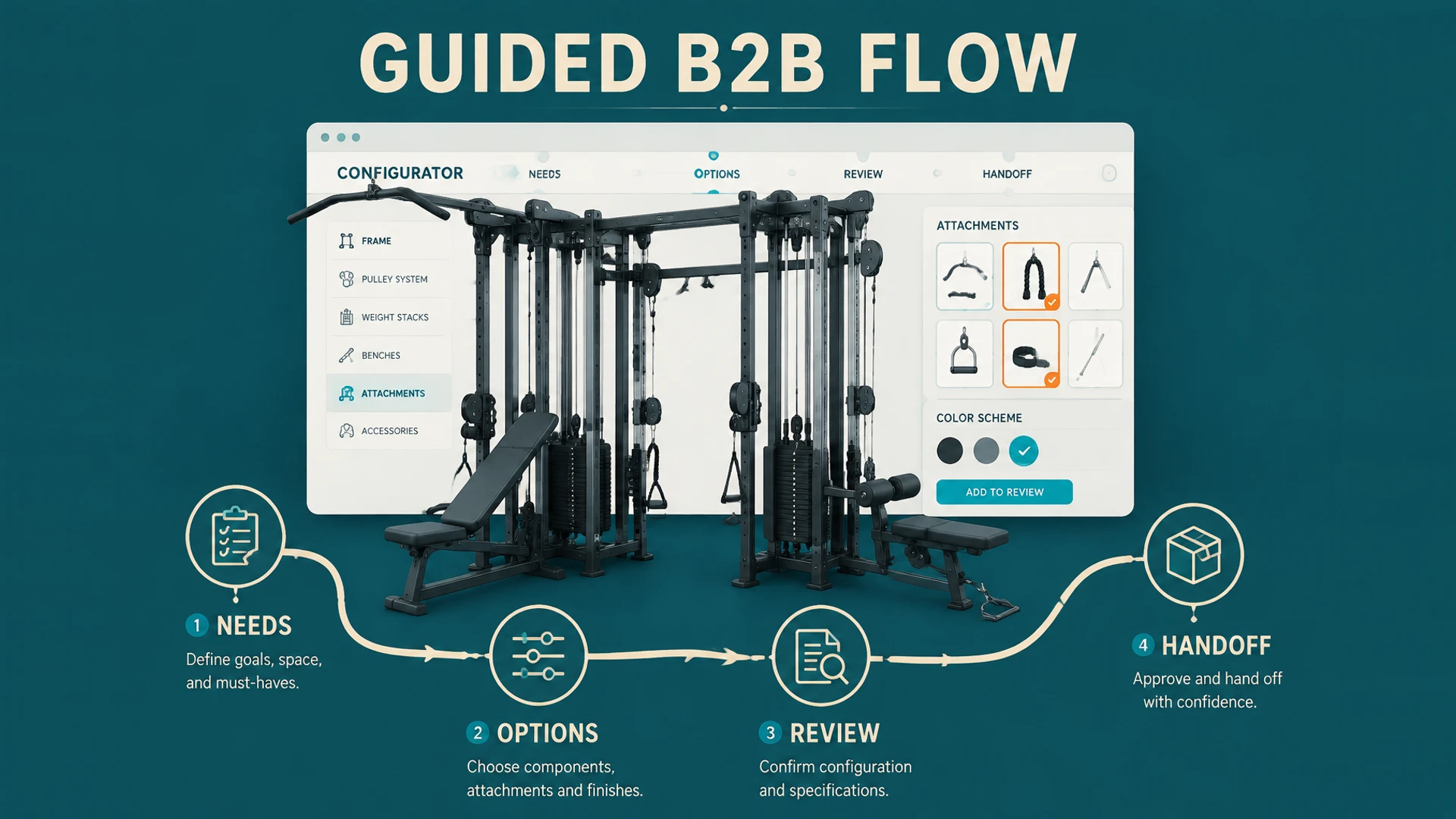
B2B does not need to imitate consumer checkout
Industrial equipment, engineering products, and high-value custom goods often require technical confirmation, regional pricing, or dealer participation. Asking a buyer to complete every choice and payment online can create unnecessary friction.
A better goal is to give the buyer a clear preliminary solution while giving sales a structured starting point for the next conversation.
Help buyers understand product scope and key differences
Guide them through the choices with the highest decision value
Output a configuration summary suitable for internal review
Route the next action to the right sales or dealer contact
Design the flow to narrow the scope gradually
A B2B product should not expose every parameter at the start. Begin with application, core version, or capacity, then move to modules, accessories, and visual details.
Each step should explain what the choice affects and what the buyer receives at the end, such as a recommended model, indicative lead time, or a specialist follow-up.
Step one: application, industry, or core need
Step two: product version, specification, or capacity
Step three: modules, accessories, and finish choices
Step four: configuration summary, contact details, and next-step guidance
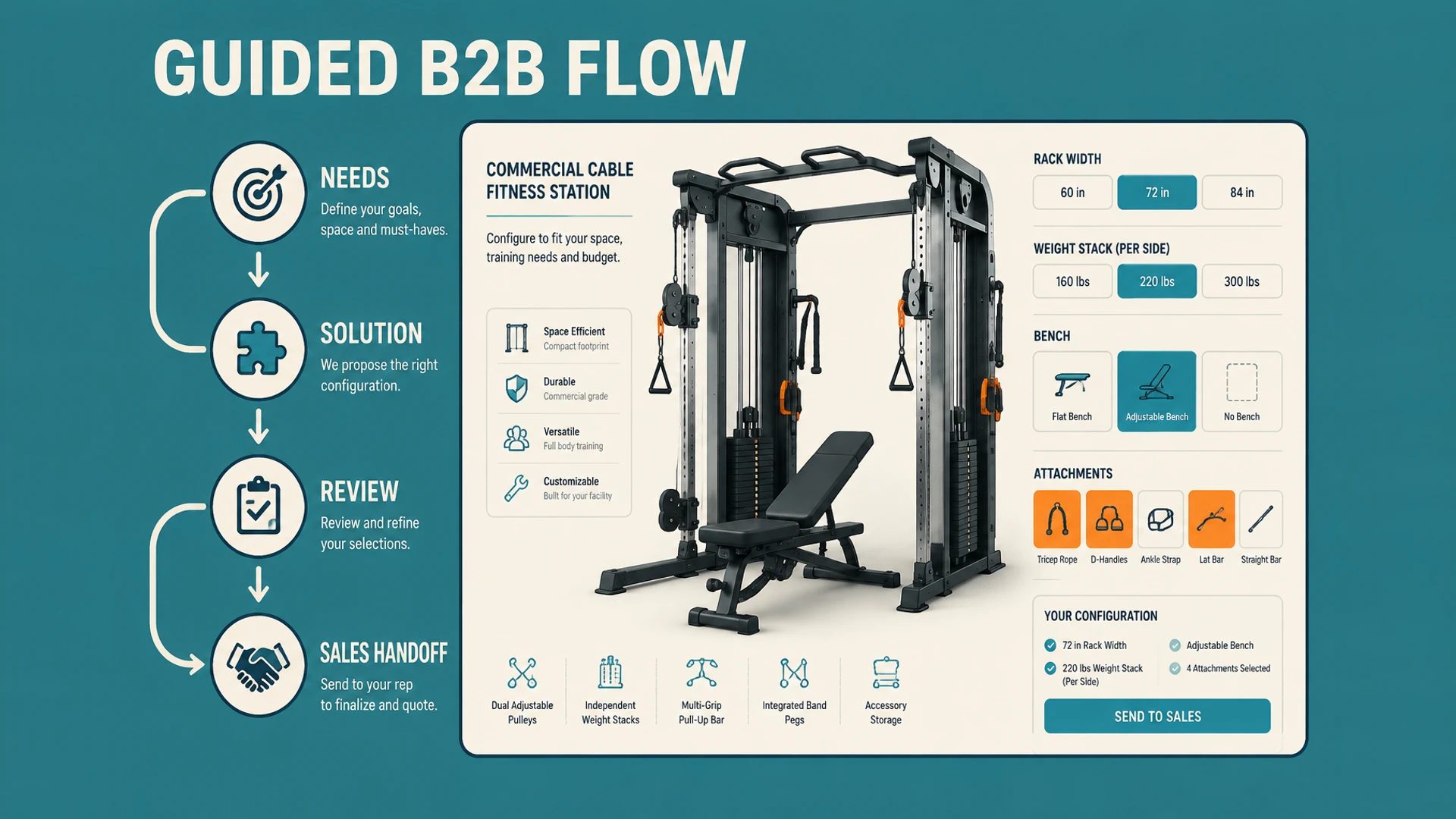
The configuration summary is a sales asset
A submitted configuration should prevent sales from asking the same questions again. Alongside option data, it can capture region, project stage, expected quantity, timeline, and priorities.
Show buyers an understandable solution summary
Give sales option codes and rule status
Route leads by region, industry, or product line
Keep a shareable link for multi-party discussion and revision
Do not ask only for a name and email
The inquiry form should support the sales team's next decision. Depending on the product, collect region, company, application, expected quantity, project stage, purchasing timeline, and the outcome the buyer wants, in addition to contact details.
Do not show every field at once. Complete the product configuration first, then ask only the follow-up questions required by the selected solution. This keeps the form from becoming a barrier before the buyer understands the product.
Define a readable sales handoff
Generate both a buyer-facing summary and an internal data record. The buyer version should emphasize the product image, option labels, and next step. The internal version should preserve product codes, rule status, region, quantity, price status, and source page.
After receiving an inquiry, sales should be able to answer three questions quickly: what did the buyer configure, which choices still need confirmation, and who follows up next and when.
Measure the first release by business outcomes
Online order volume is not the only useful target for industrial or high-value products. Track configuration completion, qualified inquiry rate, inquiry completeness, first sales response time, and whether incorrect selections or repeated clarification work decrease.
Ready to turn these principles into a project plan?
We can review your product structure, option logic, and target market to define a practical delivery scope and launch priority.